How colonialism shaped Africa’s modern borders, economies, and identity
Few forces in history have reshaped a continent as swiftly or as violently as European colonialism reshaped Africa. In the span of a few decades, foreign powers carved up a vast and diverse landmass, drawing borders that ignored centuries of culture, language, and kinship. The consequences of those decisions still ripple through politics, economies, and daily life across Sub-Saharan Africa today.
The scramble that redrew the map
In 1884 and 1885, representatives of fourteen European nations gathered in Berlin to negotiate control over Africa. Not a single African leader received an invitation. The result was the formal partition of the continent, a process historians call the Scramble for Africa. Within thirty years, European powers controlled roughly ninety percent of African territory.
The borders drawn in Berlin conference halls sliced through existing kingdoms, ethnic homelands, and trade networks with no regard for the people living within them. The Somali people found themselves divided among British, Italian, and French territories. The Ewe of present-day Ghana and Togo were split between British and German rule. The Yoruba, the Mandinka, the Luo: countless communities discovered that their neighbours overnight had become subjects of a rival empire. These divisions did not vanish when independence came. In many cases, they hardened into the fault lines of modern conflict.
Economic extraction and its long shadow
Colonial economies were not designed to benefit African populations. They were designed to extract. European powers built railways and roads not to connect African communities to one another, but to move resources from the interior to the coast, and from the coast to European markets. Copper from the Congo, gold from South Africa, groundnuts from Senegal, rubber from the forests of Central Africa: all flowed outward, enriching distant shareholders while leaving local populations with little in return.
In many colonies, African farmers were forced off productive land and onto cash-crop systems that served European demand. In Southern Rhodesia, now Zimbabwe, the Land Apportionment Act of 1930 reserved the best agricultural land for white settlers, pushing African farmers into overcrowded and often infertile reserves. Similar policies played out across Kenya, South Africa, and Namibia. The economic hierarchies those policies created persisted after independence. They left behind deeply unequal land distributions, under-developed local industries, and financial systems still oriented toward external markets rather than internal development.
Language, education, and the politics of culture
Colonial rule also reached into the most intimate spaces of African life. Missionaries and administrators together built school systems that taught African children in European languages and according to European values. In many cases, speaking a local language in school was punishable. The effect was to associate indigenous knowledge and culture with backwardness, while positioning European culture as the standard of civilisation.
The legacy of this is visible across the continent today. French remains the official language of more than twenty African countries. English dominates government, law, and higher education from Lagos to Nairobi to Cape Town. Portuguese holds that role in Angola, Mozambique, and Guinea-Bissau. In most of these nations, decisions of national importance are made in a language that a large portion of the population does not use at home. This creates barriers to political participation, legal access, and economic opportunity that affect millions of people every day.
Furthermore, the missionary-backed education system often marginalised or actively suppressed traditional spiritual practices, forms of governance, and knowledge systems. Across Central and West Africa, centuries of accumulated knowledge about agriculture, medicine, and ecological management were dismissed as superstition. Recovering and revaluing that knowledge is now a growing priority for scholars and policymakers across the continent.
Independence and the unfinished work of decolonisation
The wave of independence that swept Sub-Saharan Africa from the late 1950s through the 1970s was a moment of extraordinary hope. Leaders like Kwame Nkrumah in Ghana, Julius Nyerere in Tanzania, and Patrice Lumumba in the Congo articulated bold visions of African self-determination and continental solidarity. However, independence did not mean the end of foreign interference. Cold War powers continued to manipulate African politics, backing coups and propping up authoritarian leaders who served external interests over the welfare of their own populations.
In addition, the economic structures of colonialism largely remained intact. Many newly independent states inherited single-commodity export economies, foreign-owned infrastructure, and debt obligations to former colonial powers. The structural adjustment programmes imposed by international lenders in the 1980s and 1990s often made things worse, forcing governments to cut public services and open markets in ways that benefited foreign investors more than local populations.
A continent reclaiming its story
Today, the conversation about colonialism and its consequences is louder and more assertive than ever. Across Africa and in the diaspora, writers, historians, artists, and activists are reclaiming African history on African terms. Movements demanding the return of cultural artefacts looted during colonial rule have won growing international attention. The Benin Bronzes, the Maqdala treasures, and thousands of other objects held in European museums represent a cultural heritage that many Africans argue belongs at home.
At the same time, a new generation of African economists and political thinkers is challenging the frameworks inherited from colonial rule and calling for economic models rooted in the realities and needs of African societies rather than imported templates. Pan-African institutions like the African Union are advancing projects like the African Continental Free Trade Area, which aims to build the internal trade connections that colonialism deliberately prevented.
Colonialism did not simply happen in the past. Its effects are present in the classroom, the courtroom, the farm, and the parliament. Understanding those effects clearly is not an exercise in blame but a necessary condition for building something better. Africa’s future, as many of its people insist, belongs to Africans. The work of making that fully true is still very much underway.
Related Posts
 Great African kingdoms before colonialism: a forgotten legacy.
Long before European colonial powers redrew Africa's borders, the continent was home to powerful and…
 The Great Powers Compete for Africa’s Favor
Suddenly, the US, Russia and France are spending time and effort nurturing their African friendships.…
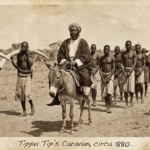 Ivory, power and human lives: the shadow empire of Tippu Tip
/* Main Layout */ .tippu-wrapper { font-family: 'Georgia', 'Times New Roman', serif; line-height: 1.7; color:…