Mombasa fish markets: where the ocean meets the plate
Along Kenya’s Indian Ocean coastline, the fish markets of Mombasa pulse with a life that begins before sunrise. Wooden dhows glide in from the open sea, their hulls heavy with the night’s catch, while traders and fishermen call out prices in a fluid mix of Swahili and coastal dialects. Here, in the salt-thick morning air, the foundations of one of East Africa’s most distinctive cuisines are laid out on ice and woven baskets still gleaming, still breathing.
The markets that feed a city
Mombasa’s most celebrated fish market sits at the Old Town waterfront, just a short walk from Fort Jesus. Known locally simply as the soko la samaki , the fish market draws fishermen from as far as Shimoni and Malindi, converging on the city’s harbour in the early hours. A second, equally important hub thrives at Likoni, on the southern mainland, where the ferry crossing brings a steady stream of traders and buyers from the wider coast.
By six in the morning, the markets are in full roar. Yellowfin tuna, red snapper, kingfish, tilapia, and the prized changu , the emperor fish, are laid out in glistening rows. Barracuda hang from hooks. Octopus, still violet and dark from the sea, are slapped against stone to tenderise them, a centuries-old practice that draws curious glances from visitors and knowing nods from those who grew up watching their grandmothers do the same.
The buyers are as diverse as the catch. Restaurant owners negotiate in low voices. Home cooks squeeze and sniff with practiced authority. And the fishmongers themselves, many from families who have worked these waters for generations, make their pitches with the easy confidence of people who know their product is worth every shilling.
A cuisine shaped by the sea and the spice trade
To understand why the fish markets matter so deeply to Mombasa, you have to understand the city’s culinary history. For centuries, the Swahili coast was a crossroads of trade. Arab merchants, Persian sailors, Indian traders, and Portuguese explorers all passed through, and all left traces in the local kitchen. The result is a cuisine unlike anything else on the continent: fragrant with cardamom and cumin, rich with coconut milk, and always, at its centre, the sea.
Fish is the central ingredient in coastal Kenyan cooking. Samaki wa kupaka , fish grilled and then bathed in a thick, golden coconut and tomato sauce, is arguably the dish that defines the Swahili table. Wali wa nazi, rice cooked in coconut milk until it is fragrant and slightly sticky, is its natural companion. Together, they represent a marriage of ocean and spice that has been refined over hundreds of years.
None of this would be possible without the markets. The fish that arrives each morning determines what cooks will make that day. There are no fixed menus in the truest coastal tradition, only what the sea has offered, prepared with the spices that have always been close at hand.
Street food, smoke, and the midday rush
By mid-morning, the raw commerce of the markets gives way to something more festive. Along the edges of the Old Town waterfront and throughout the Likoni area, charcoal grills are lit and the smell of woodsmoke and caramelising fish begins to drift through the narrow streets. This is where the catch gets from sea to stomach fastest.
Whole fish, marinated in garlic, ginger, turmeric, and chilli, are laid over open coals. Vendors serve them wrapped loosely in newspaper or on metal trays with wedges of lime and pilipili sauce, a searingly hot condiment made with local chillies and tomatoes. Fried fish bhajias, golden and herb-flecked, are sold by the bag to workers and school children passing by. Coconut-marinated prawns skewered on sticks disappear almost as quickly as they are cooked.
For visitors, eating at the market is as close as you can get to the true pulse of Mombasa’s food culture. There is nothing performative about it. This is simply how the city eats, loudly, generously, and with complete confidence in the quality of what comes from its waters.
Challenges beneath the surface
But the vibrancy of the markets masks real pressures. Overfishing along the Kenyan coast has been a growing concern for more than a decade, with catches of some species declining noticeably. Illegal, unreported, and unregulated fishing, much of it by larger commercial vessels operating beyond the reach of local oversight, threatens the small-scale fishermen who supply the markets and have done so for generations.
Climate change adds another layer of difficulty. Rising ocean temperatures have affected coral reef health across the Western Indian Ocean, disrupting the ecosystems that support the fish populations the coast depends on. Some fishermen speak of having to travel much farther out to sea to find the same volumes they once caught close to shore.
Local conservation groups, working alongside Kenya’s government and international partners, have established marine protected areas along stretches of the coast, and there are community-led initiatives to promote sustainable fishing practices. But the balance between economic necessity and ecological responsibility remains a delicate and unresolved one.
A living tradition worth preserving
What is certain is that the fish markets of Mombasa are far more than commercial spaces. They are living archives of a coastal culture, places where Swahili language, culinary knowledge, trade relationships, and community identity are transmitted daily, not through books or institutions, but through the simple, repeated act of bringing the sea’s abundance to shore.
For Kenya’s coastal cuisine to survive and thrive, the markets must too. The smell of fresh tuna at dawn, the rhythmic slap of octopus on stone, the hiss of fish hitting a hot grill: these are the sensory details, and they are also the sounds and smells of a way of life that has endured for centuries and that, with the right care, can endure for centuries more.
Related Posts
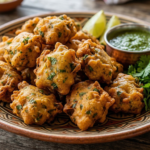 Golden coriander fish bhajias: a Swahili delight
```html /* Main Layout */ .bhajia-wrapper { font-family: 'Helvetica Neue', Helvetica, Arial, sans-serif; line-height: 1.7;…
 Thieboudienne – Senegal's beloved jollof rice with fish
Hearty, spiced, and rich in tradition, this national dish layers bold tomato flavor with tender…
 Beginner's guide to Tanzanian cuisine
Tanzanian cuisine: a world of flavour from coast to highlandsAlong the shores of the Indian…