The Kenyatta International Congress Centre (KICC)
When Kenya gained independence in 1963, the young nation faced a defining question: What What would its future look like?
Part of the answer stands boldly today in the heart of Nairobi. The Kenyatta International Convention Centre (KICC)is more than a building. It was imagined as a symbol of unity, progress and Kenya’s entry into the global arena.
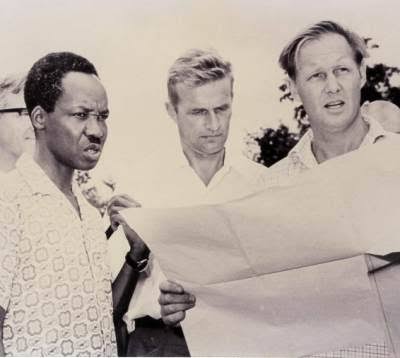
What many don’t know is that this landmark was born from an extraordinary cross-cultural partnership between a Norwegian architect, Karl Henrik Nøstvik , and Kenya’s first Chief Architect, David Mutiso. Together, they created a structure that blended modernist ambition with Kenyan identity, transforming Nairobi’s skyline and cementing Kenya’s place on the world stage.
A Vision Born in a New Kenya (1967)
In the late 1960s, the newly independent Kenyan government sought to define a national identity rooted in pride, progress and global presence. Nairobi needed a venue where leaders could gather, a place that embodied diplomatic ambition and cultural confidence.
President Jomo Kenyatta envisioned:
- A first-rate conference facility
- A national landmark
- A symbol of East Africa’s modern future
To bring this vision to life, two architectural minds converged:
- Karl Henrik Nøstvik (Norway) trained in Scandinavian modernism, he introduced bold geometric forms and international standards.
- David Mutiso (Kenya) rooted the structure in Kenyan culture, symbolism, and climate.
Their union was more than professional. It was symbolic.
A young Kenya collaborating with global expertise to shape its identity and future.
Designing KICC: Where Modernism Meets Kenyan Soul
Construction began in 1967, and what emerged was unlike anything Africa had seen before.
- The Cylindrical Tower: Rising to 105 meters with 32 floors, it represents strength, continuity, and unity.
Fun fact: for years, it was Nairobi’s tallest building.
- African Motifs Modernized: The Amphitheatre echoed traditional communal spaces, interiors celebrated local craftsmanship, and warm earth tones mirrored East African landscapes.
- Built for Diplomacy: With simultaneous translation systems, breakout rooms, and even a rooftop helipad, futuristic for its time, KICC boldly declared: “We belong on the global stage.”
Fun Facts That Inspire Pride
- On Kenyan Currency: KICC is featured on the 100-shilling note, making it a daily symbol of national pride.
- Global Coordinates: Its exact location, 1°17′19″S, 36°49′23″E, places it at the very heart of Nairobi. Helipad Fame: The rooftop helipad is functional, and it is also one of Nairobi’s most photographed spots, offering panoramic views that have become a rite of passage for visitors.
- Cultural Stage: Beyond politics, KICC hosts festivals, exhibitions, and performances, featuring Kenya’s vibrant arts and culture.
- Norwegian Kenyan Legacy: Few know that this collaboration was one of the earliest architectural unions between Africa and Scandinavia, a quiet but powerful symbol of solidarity across continents.
Leadership, Politics & Collaboration
KICC emerged from a rare blend of vision, influence, and creativity:
- President Jomo Kenyatta drove the project as a defining symbol of a young nation.
- Minister Mbiyu Koinange oversaw its progress and ensured its completion.
- Mutiso and Nøstvik fused international modernism with Kenyan cultural depth.
It was this collective alignment, political, cultural, and architectural, that transformed KICC from an idea into an enduring icon.
Opening Day: 11 September 1973
President Kenyatta officially inaugurated KICC in 1973 and by 1974 the project was complete.
At the time, it was:
- Nairobi’s tallest building
- Africa’s most advanced conference facility
- A national treasure anchoring the Central Business District.Legacy: Why KICC Still Matters Today
- Africa’s Diplomatic Stage: Hosting AU summits, global conferences and cultural festivals.
- National Symbol: Appearing on currency, postcards and branding.
- Urban Landmark: Its rooftop remains a magnet for tourists, photographers and content creators.
A Cross-Cultural Masterpiece
The partnership between Karl Henrik Nøstvik and David Mutiso remains one of the most celebrated architectural unions in Kenyan history. Their work proved that:
- International and local visionaries can build greatness together
- Architecture can bridge cultures
- Buildings can embody the spirit of a nation
KICC is concrete and glass. It is also a story of collaboration, ambition, identity and legacy legacy. A landmark built by two men from different worlds, unified by one vision: to give Kenya a place to stand tall.
Related Posts
 Disco Matanga: inside the Giriama nightlong farewell where grief dances
/* Main Layout */ .bracelet-wrapper { font-family: 'Helvetica Neue', Helvetica, Arial, sans-serif; line-height: 1.7; color:…
 Kenya’s History – Timeline
A chronology of important events in the area we know today as Kenya: Approximately 3.3…
 Uhuru Kenyatta’s Unexpected Role in South Africa’s 2024 Election
When a Former President Becomes a Peacemaker In a surprising turn of events, Kenya's former…