Zanzibar travel guide: where the Indian Ocean meets Swahili culture
Few islands anywhere in the world pack as much into a single destination as Zanzibar. This Tanzanian archipelago sits just off the East African coast, and it draws travellers with its white-sand beaches, coral reefs, aromatic spice farms, and a historic old town that carries centuries of layered history in every carved doorway and coral-stone wall.
Zanzibar is not one island but many. The main island, Unguja, is what most visitors mean when they say Zanzibar. To its north lies Pemba, a greener and far quieter island popular with divers. Together they form the semi-autonomous region of Zanzibar, part of Tanzania yet distinct in culture, language, and identity. The majority of the population is Muslim, and the island’s character reflects a centuries-long blend of African, Arab, Persian, Indian, and Portuguese influences.
Stone Town: the beating heart of the island
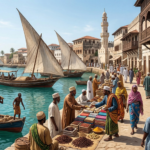
Any visit to Zanzibar begins in Stone Town, the old quarter of Zanzibar City and a UNESCO World Heritage Site since 2000. Walking through its narrow, winding alleys feels like stepping into a city that time has chosen not to erase. Ornate wooden doors studded with brass spikes line the streets, each one a statement of status from the merchants and sultans who once ruled the Indian Ocean trade routes.
The Forodhani Gardens, a waterfront park that comes alive at dusk, offer one of the most memorable evenings on the island. Vendors set up grills and tables as the sun drops into the sea, and the air fills with the smell of grilling octopus, Zanzibar pizza, and sugarcane juice. This is street food at its most theatrical, and it costs very little.
Stone Town also carries a darker history. The old slave market, now the site of the Anglican Cathedral, stands as a sobering reminder that Zanzibar was once the largest slave trading port in East Africa. The underground holding cells have been preserved, and visiting them provides essential context for understanding the island’s place in the wider history of the region.
The beaches: from popular shores to hidden retreats
Zanzibar’s beaches are genuinely world class. However, they vary considerably in character depending on where you go, and choosing the right one for your travel style matters.
Nungwi, at the northern tip of Unguja, is the most developed beach destination on the island. It offers the advantage of calm, swimmable water at virtually all hours, because the tides here are less extreme than elsewhere. Restaurants, dive centres, and resorts line the shore, and the village behind the beach retains a working fishing community. Furthermore, the sunsets from Nungwi are spectacular, painting the sky in shades of amber and rose.
Kendwa, just a short walk from Nungwi, offers a slightly more relaxed atmosphere. It is perhaps best known for its full-moon parties, which draw a young, international crowd each month. In contrast, Paje on the southeast coast attracts kitesurfers thanks to its consistent winds and shallow lagoons at low tide. The beach at Paje stretches wide and powdery white, with a laid-back village behind it full of small guesthouses and beachside cafés.
For those seeking solitude, the beaches of the northeast, around Matemwe and Muyuni, offer long, uncrowded stretches of sand with views across to the Mnemba Atoll. This protected marine area is one of the best snorkelling and diving spots in the entire Indian Ocean, home to sea turtles, dolphins, and hundreds of species of reef fish.
Spices, seafood, and Swahili flavours
Food in Zanzibar is an experience in itself, and it deserves as much attention as the beaches. The island earned the nickname Spice Island for good reason. Cloves, nutmeg, cinnamon, cardamom, and vanilla all grow here, and their fragrance drifts through the air on a spice farm tour. These tours, available from Stone Town, bring the island’s agricultural heritage to life and typically end with a meal prepared from what you have just seen growing.
Zanzibari cuisine reflects the island’s multicultural history. Seafood dominates, simply because the ocean provides an extraordinary abundance. Grilled lobster, octopus curry, prawns in coconut milk, and whole grilled fish with tamarind sauce appear on menus across the island. In addition, the Indian influence shows strongly in the use of spiced rice dishes, biryanis fragrant with clove and cardamom, and the famous Zanzibari pilau.
For breakfast, look for mandazi, a lightly sweetened fried dough similar to a doughnut, served alongside spiced chai. At lunch, many locals eat urojo, a Zanzibar mix soup that combines coconut broth, bhajias, boiled egg, mango, and cassava in a single bowl. It sounds unlikely but tastes extraordinary.
Beyond the beach: experiences worth seeking out
Zanzibar rewards travellers who look beyond the shoreline. The Jozani Chwaka Bay National Park, in the centre of the island, protects the last significant population of the red colobus monkey, a species found nowhere else on earth. Walking the forest trails in the early morning, with these rust-coloured monkeys moving through the canopy above, is one of those quietly memorable experiences that stays with you long after you leave.
Dolphin tours operate from the village of Kizimkazi on the southern tip of the island. Spinner and bottlenose dolphins are frequently spotted in these waters, and responsible operators allow swimming alongside them. It is worth researching the operator carefully to ensure the tour follows ethical wildlife guidelines.
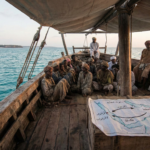
A sunset dhow cruise is a Zanzibar classic for good reason. These traditional wooden sailing vessels have plied these waters for centuries, and an evening on the water, with the Stone Town skyline receding behind you and the sky turning gold, offers a perspective on the island that no land-based vantage point can match.
Planning your visit
The best time to visit Zanzibar is during the dry seasons, which run from June to October and from December to February. The long rains, known locally as masika, fall between March and May, while shorter rains arrive in November. Even in the wet season, however, Zanzibar has much to offer, and prices drop considerably.
Most visitors fly into Abeid Amani Karume International Airport, with connections from Dar es Salaam, Nairobi, and several European cities. A ferry from Dar es Salaam is also an option and takes roughly two hours. Finally, it is worth noting that Zanzibar has its own entry requirements separate from mainland Tanzania, so checking visa requirements in advance is essential.
Zanzibar is an island that earns its reputation. It offers beauty, history, and flavour in equal measure, and it continues to surprise even those who think they know exactly what to expect.